
Introduction
At its core, Is Pinterest Social Media is often grouped with giants like Instagram and TikTok, but it actually functions more as a visual discovery engine than a traditional social network. While it has social features like comments and shares, it is fundamentally a tool for saving, organizing, and finding inspiration through “Pins.” Unlike platforms built for chatting, Pinterest is a digital filing cabinet where people go to plan their future rather than broadcast their present.
Think about the last time you opened an app just to see what your friends were up to—that probably wasn’t Pinterest. In 2026, the digital world is noisier than ever, yet Pinterest remains the “anti-doomscroll” haven where users show up with high intent to actually do or buy something. For marketers, treating it like just another social feed is a trap; it’s the difference between shouting into a crowded room and placing a helpful map in the hands of someone already looking for a destination.
In this guide, we’ll dive into why this distinction is the “secret sauce” for your 2026 strategy. We will explore how Pinterest’s unique search-first algorithm can give your content a shelf-life that lasts for months, long after a standard social post would have vanished. Understanding this shift from “socializing” to “searching” is exactly how you’ll turn casual browsers into loyal customers this year.
What Is Pinterest? Is Pinterest Social Media?
Pinterest is often called a social network, but it is actually a visual search engine. Think of it as a digital scrapbooking tool. Users find images, called Pins, and save them to organized boards. It is a place where people go for inspiration on home decor, fashion, and recipes. While you can follow people, the focus is on the ideas, not the person who posted them.
Technically, it has social features like comments and likes, but the behavior is different. On most social apps, you talk to friends or share your daily life. On Pinterest, you are usually alone, planning a project or shopping for a new look. It is less about “look at me” and more about “look at this idea.” For this reason, it acts more like Google with pictures than a chat app.
How Pinterest Works as a Visual Discovery Platform
Pinterest works by using an advanced algorithm to match your interests with high-quality images. When you search for a term, the platform doesn’t just look for keywords; it analyzes the visual details of the Pins. This allows it to show you similar styles, colors, and products that you might like. It acts as a bridge between a vague idea in your head and a concrete product or project on your screen.
The process is simple and intuitive for the user. You start with one idea, and as you click on a Pin, Pinterest suggests “More like this” at the bottom. This creates a discovery loop where one search leads to dozens of new inspirations. Because the platform learns your taste over time, your home feed becomes a personalized catalog tailored specifically to your future plans and shopping habits.
Is Pinterest Social Media or a Visual Search Engine?
The truth is that Pinterest is a hybrid, but it leans heavily toward being a visual search engine. Most social media apps focus on “now” and what your friends are doing. Pinterest is about “later” and what you want to create or buy. Users don’t go there to chat; they go there to find answers to specific questions using images instead of just words.
Marketers should view it as a library rather than a cocktail party. On a social site, your post might disappear in hours. On a search engine like Pinterest, your content can be discovered for months or even years. It uses keywords and visual data to connect people with products. This makes it a powerful tool for driving traffic to websites because the users are already looking for solutions.
Is Pinterest Social Media? What Reddit Users Say
On Reddit, the debate is settled: most users and marketers in 2026 call Pinterest a “search engine in disguise.” In popular subreddits like r/Marketing and r/Blogging, the common advice is to stop treating it like Instagram. Redditors point out that while you “follow” people, you rarely actually talk to them. Instead, they describe it as a place for “high-intent” browsing where people go to solve problems rather than socialize.
Many Reddit users highlight that Pinterest is the “anti-social” app of the year. They love it because it lacks the “noise” and toxic comments found on other platforms. For business owners, the “Reddit truth” is that Pinterest content lives longer because it is searchable. While a tweet or post might die in hours, Redditors often share stories of Pins from years ago that still drive traffic today.
Why Experts Say Pinterest Is Not Social Media
Digital marketing experts in 2026 agree that Pinterest is a utility tool, not a social one. On social media, the main goal is to build a community and talk to followers. On Pinterest, the goal is to find information or solve a problem. Experts point out that users don’t go there to see what their friends are doing. Instead, they go there to plan a wedding, find a recipe, or shop for furniture.
Industry leaders also highlight the shelf-life of content as a major difference. A post on a social network usually dies within 24 hours. A Pin can continue to get clicks and saves for months or even years. This happens because Pinterest uses a search index, not a chronological feed. Because it organizes data based on interests rather than social connections, experts classify it alongside Google and YouTube.
Is Pinterest the Happiest Social Media Platform?
In 2026, Pinterest is widely considered the “happiest” corner of the internet. Unlike other platforms that focus on news, politics, or social comparison, Pinterest is designed for inspiration and positivity. Studies show that even 10 minutes on the app can help lower stress and burnout. Because it is a place for planning your own dreams rather than watching others live theirs, users leave the platform feeling motivated instead of exhausted.
The platform maintains this “safe haven” feel through strict community guidelines and inclusive AI. It actively blocks toxic content and uses technology to ensure everyone feels represented in their searches. For marketers, this positive environment is a huge win. People are more likely to trust and buy from brands when they are in a good mood.
- 8 in 10 users describe Pinterest as a positive place.
- High-Intent Planning: Users visit to find solutions, not to argue or “doomscroll.”
- Brand Safety: Strict policies keep ads away from sensitive or negative topics.
- Inclusive Features: Tools like “skin tone ranges” and “hair pattern search” make discovery easier for everyone.
Is Pinterest Safe as a Social Media Platform?

Pinterest is widely regarded as one of the safest platforms online because its design discourages social conflict. Unlike other apps where heated debates and “call-out culture” are common, Pinterest focuses on visual projects and personal goals. By removing the emphasis on likes and public follower counts, the platform reduces the pressure of social comparison. In 2026, it remains a top choice for users who want to avoid the “noise” and negativity found on more traditional social networks.
The platform also leads the industry with strict content policies and advanced safety tools. For example, Pinterest was among the first to ban political ads and “body-shaming” weight loss content to protect user mental health. While no platform is 100% risk-free, Pinterest uses a mix of AI and human moderation to keep the environment helpful and inspiring. For parents and teens, it offers robust privacy settings—like the “Parental Passcode”—to ensure that discovery stays age-appropriate and secure.
Pinterest Safety & Privacy Features (2026)
| Feature | What It Does | Best For |
| Parental Passcode | A 4-digit code that locks account settings. | Parents managing teen accounts. |
| Private Profiles | Hides your profile and Pins from search engines. | Users who want a private “digital scrapbook.” |
| Comment Filtering | Automatically hides comments with specific toxic words. | Creators who want a positive community. |
| Inclusive Search | Filters results by skin tone or hair pattern. | Diverse representation in beauty/fashion. |
| Two-Factor (2FA) | Adds an extra layer of security during login. | Protecting your account from hackers. |
| Secret Boards | Creates boards visible only to you or invited guests. | Private planning for weddings or surprises. |
| Teen Safety Defaults | Automatically sets accounts under 16 to private. | Protecting younger users by default. |
Is Pinterest Social Media or a Search Engine?
Pinterest is a unique hybrid, but it functions mostly like a visual search engine. On social media, you usually post updates to get “likes” from friends. On Pinterest, you type keywords into a search bar to find ideas for your life. People use it to plan weddings, find recipes, or shop for new clothes. It is less about talking to others and more about finding the right information through images.
For marketers in 2026, this distinction is very important. On a social app, your post might disappear from a feed in just a few hours. On a search engine like Pinterest, your Pin can be discovered for months or even years. Because it uses keywords and visual data to match content with users, it acts just like Google but with pictures. This makes it a powerful tool for driving steady traffic to your website.
Pinterest vs Social Media Platforms: Key Differences
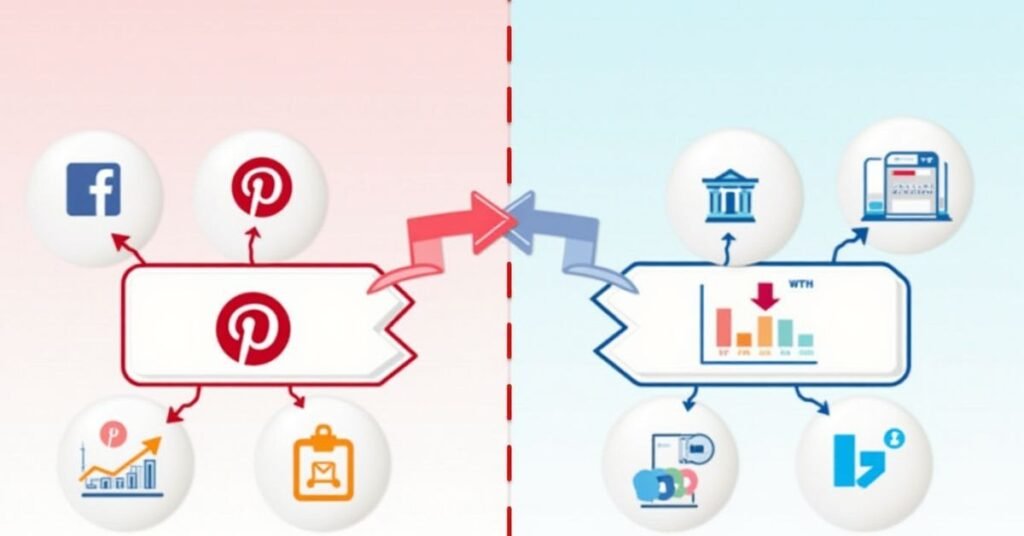
In 2026, the gap between Pinterest and social media has grown even wider. Traditional social platforms like Instagram and TikTok are built for immediacy and hype, focusing on what is happening right this second. Pinterest, however, is a tool for the future. Users don’t log in to see what their friends ate for lunch; they log in to plan their own home renovations, weddings, or wardrobes for next season. This “planning mindset” makes Pinterest a unique space where people are already looking for things to buy.
For marketers, the biggest difference is how long your content stays relevant. On a standard social feed, a post usually “dies” and stops being seen within 24 hours. On Pinterest, a Pin is evergreen. Because the platform works like a search engine, a high-quality Pin can continue to show up in search results and drive traffic to your website for months or even years. This allows you to build a permanent library of content that works for your business 24/7, long after you hit publish.
| Feature | Instagram/TikTok | ||
| Core Purpose | Visual Discovery & Planning | Entertainment & Trends | Community & News |
| Content Lifespan | 4–6 Months+ (Evergreen) | 24–48 Hours | 5–6 Hours |
| User Intent | High (Ready to do/buy) | Passive (Scrolling/Bored) | Social (Connecting) |
| Primary Goal | Solving a Problem | Engagement (Likes/Comments) | Relationship Building |
| Search Power | High (SEO-based) | Low (Hashtag-based) | Moderate (Internal) |
| Direct Links | Allowed on every Pin | Limited (Bio or Stories) | Allowed (often throttled) |
Why Pinterest Works Without Being Social Media
Pinterest succeeds because it focuses on personal utility rather than social interaction. In 2026, most platforms fight for your attention by showing you what others are doing. Pinterest does the opposite; it shows you what you can do. It works because it is a goal-oriented tool. Users don’t log in to “socialize” or chat with friends. They log in to find a solution, plan a project, or discover a product that makes their life better.
Because the platform is built on intent, it functions perfectly without the traditional “social” noise. You don’t need a large following or a blue checkmark to go viral. If your content is helpful and uses the right keywords, the search engine will find it and show it to the right person. This “search-first” model means your work is judged by its value, not by how many friends you have.
- Intent over Engagement: Users are there to take action, not just “like” a post.
- Algorithm of Helpfulness: The system prioritizes Pins that solve problems or provide clear inspiration.
- No Social Pressure: There is no “comment war” or “FOMO” because the focus is on your own private boards.
- Unbranded Discovery: 96% of searches are unbranded, meaning small businesses can win just by being relevant.
Is Pinterest Social Media for Engagement or Discovery?
Pinterest is built for discovery, not for social engagement. On apps like Facebook or Instagram, the goal is to get likes, shares, and comments from friends. On Pinterest, the real win is a “save” or a “click.” Users are exploring new ideas for their own lives rather than trying to start a public conversation. This makes it a powerful tool for finding things you didn’t even know you were looking for.
For a marketer in 2026, this means your strategy should focus on inspiration. You don’t need to worry about replying to every comment or building a chatty community. Instead, you should focus on creating beautiful, helpful Pins that show up when someone searches for a solution. Because it is a discovery engine, the platform introduces your brand to new people every single day based on their interests.
Is Pinterest Social Media for Traffic & SEO?
In 2026, savvy marketers treat Pinterest as a high-performance traffic engine rather than a social chat room. Because it functions as a visual search engine, every Pin you post acts like a mini-webpage that can rank in search results. Unlike other social apps where your content dies in a day, Pinterest SEO allows your Pins to stay “evergreen.” This means a single helpful image can drive consistent, high-quality traffic to your website for months or even years after you first upload it.
The platform is especially powerful because it reaches users when they are in a “planning and buying” mindset. While people use other social media to pass the time, they use Pinterest to find solutions—like “small kitchen remodel ideas” or “2026 summer fashion trends.” By optimizing your Pin titles and descriptions with the right keywords, you aren’t just getting views; you are catching potential customers right at the moment they are looking for exactly what you offer.
- Long-Term Results: Pins have a “half-life” of months, compared to minutes or hours on X (Twitter) or Instagram.
- Search Intent: Users search for specific ideas, making them much more likely to click through and make a purchase.
- Google Synergy: Well-optimized Pins often show up in Google Image search results, giving you double the exposure.
- Unbranded Discovery: Most searches on Pinterest are for general ideas, which allows smaller brands to compete with giant companies.
- Higher ROI: Because the traffic is organic and long-lasting, your return on investment grows over time without needing a constant ad spend.
Conclusion
Ultimately, the truth for 2026 is that Pinterest is a visual discovery engine first and a social network second. While it has social tools, its real power lies in helping people plan their future through search. For marketers, this means shifting your mindset from “gathering followers” to “solving problems.” If you provide high-quality, helpful content, the platform will reward you with long-term traffic that social media simply cannot match.
Stop worrying about likes and start focusing on intent. Pinterest is the only place where users show up specifically to find their next purchase or project. By treating it as a search engine, you can build a library of content that works for your business 24/7. It is the smartest way to reach a positive, ready-to-buy audience in a digital world that is otherwise full of noise.
FAQs
1. Is Pinterest considered social media or a search engine?
While it has social features, Pinterest is primarily a visual search engine because users use keywords to discover ideas rather than just chatting with friends.
2. How does Pinterest help with SEO in 2026?
Pins are indexed like webpages, meaning high-quality images with good keywords can rank on both Pinterest and Google for months or years.
3. Do I need a lot of followers to be successful on Pinterest?
No, because Pinterest prioritizes content relevance and search intent over follower counts, allowing small brands to reach a massive audience.
4. Is Pinterest safer than other social media platforms?
Yes, it is often called the “happiest” platform because its design and strict AI moderation focus on personal inspiration rather than social comparison or toxic debates.
5. What is the average lifespan of a Pin compared to a social media post?
A social media post usually “dies” within 24 hours, but a well-optimized Pin has a half-life of about four to six months, providing long-term traffic.

Welcome to Digital Pin Media! I’m Usama Ijaz, an AI-Powered SEO, and Content Write with 4 years of experience.
I help websites rank higher, grow traffic, and look amazing. My goal is to make SEO and web design simple and effective for everyone.
Let’s achieve more together!