

Introduction
Nature changes its colors every few months. A seasonal color palette simply means picking a set of shades that match the current time of year. Designers use these groups of colors to create a specific mood or feeling in a space. You align your style with the natural world by choosing tones that reflect the spring, summer, fall, or winter.
Do you ever feel like your home or wardrobe looks dull despite your best efforts? Most people stick to the same tired neutrals and wonder why their space lacks energy. Changing your colors with the seasons acts like a “refresh” button for your entire aesthetic. You can transform a boring room into a vibrant sanctuary without spending a fortune on new furniture.
This guide explores how to pick the perfect shades for every season. We will look at warm earthy tones for the cooler months and bright, airy pastels for when the sun shines. You will learn simple ways to mix these colors into your branding or home decor. These tips help you maintain a modern look that feels intentional and stylish all year long.
What Is a Seasonal Color Palette? Simple Guide
A seasonal color palette is a collection of colors that match the feeling of a specific time of year. Think of it like a mood board inspired by nature. You pick soft pinks for spring or deep oranges for fall. These groups of colors help you create a look that feels natural and balanced.
Most designers use these palettes to keep things fresh and modern. You can apply these colors to your home, your clothes, or even your website. Using the right season makes your style feel intentional instead of random. It is a simple way to stay trendy without changing everything you own.
How Seasonal Color Palette Analysis Works
Experts analyze your natural features to find your best colors. They look at your skin undertones, hair color, and eye shade. You usually fall into one of the four main seasons: Spring, Summer, Autumn, or Winter. This process reveals which hues make your face glow and which ones make you look tired.
The analysis uses fabric drapes to test different color groups against your skin. You compare warm tones against cool tones to see which creates a better balance. Once you find your season, you get a specific palette of shades. These colors guide your future choices for clothing, makeup, and even home decor.
12 Seasonal Color Palette Explained in Easy Steps
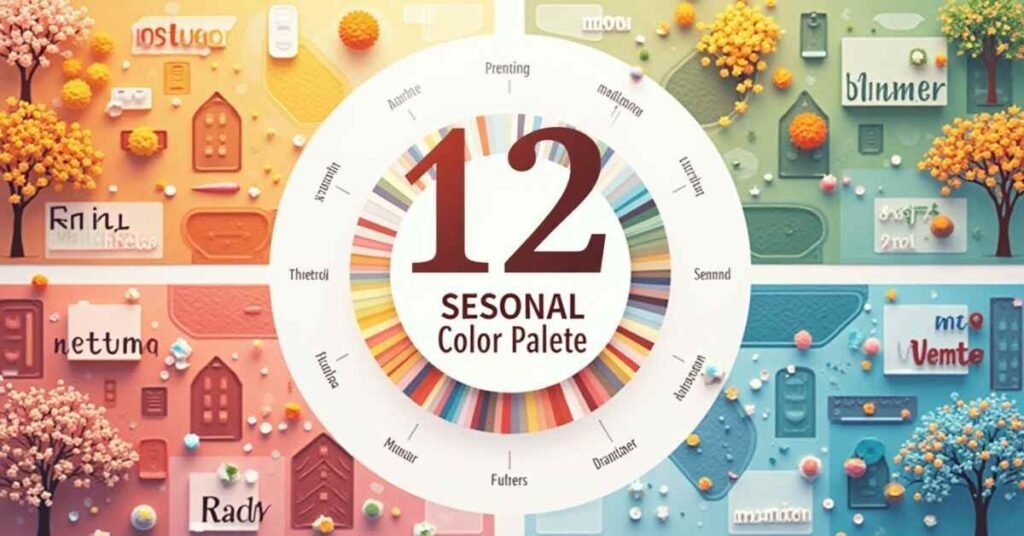
The 12-season system expands the four basic seasons into more specific groups. It looks at three main traits: hue, value, and chroma. Hue means how warm or cool a color is. Value looks at how light or dark it is. Chroma tells you if a color is bright or muted. This detailed method helps you find the exact shades that match your unique look.
Most people fit into one of these twelve categories based on their dominant trait. You might be a “Cool Winter” or a “Warm Autumn” depending on your natural contrast. This system ensures your colors never clash with your skin or hair. It gives you a clear map for shopping and styling your life.
- Bright Spring: Clear, warm, and very vibrant colors.
- True Spring: Warm, bright, and medium-light shades.
- Light Spring: Pale, warm, and delicate tones.
- Light Summer: Soft, cool, and very light colors.
- True Summer: Cool, muted, and medium-toned shades.
- Soft Summer: Muted, cool, and earthy tones.
- Soft Autumn: Muted, warm, and gentle colors.
- True Autumn: Deep, warm, and rich earthy shades.
- Dark Autumn: Deep, warm, and very dark tones.
- Dark Winter: Deep, cool, and intense colors.
- True Winter: Cool, bright, and high-contrast shades.
- Bright Winter: Clear, cool, and very striking tones.
Seasonal Color Palette Types (Spring, Summer, Autumn, Winter)

The four main seasons help categorize every color based on its temperature and intensity. Spring and Autumn represent the warm side of the wheel, while Summer and Winter represent the cool side. Spring and Winter colors usually look clear and bright. Autumn and Summer colors appear more muted, soft, or smoky.
Identifying your season simplifies your life. You stop guessing which colors look good on you at the store. Each palette provides a harmonious range of shades that naturally complement your features. When you wear your seasonal colors, your skin looks clearer and your eyes look brighter.
| Season | Primary Undertone | Main Characteristics | Best Colors to Wear |
| Spring | Warm | Bright, light, and clear | Peach, golden yellow, aqua, leaf green |
| Summer | Cool | Soft, muted, and light | Lavender, powder blue, slate grey, rose pink |
| Autumn | Warm | Deep, rich, and earthy | Mustard, rust orange, olive green, chocolate |
| Winter | Cool | Bold, bright, and dark | Royal blue, emerald green, magenta, pure white |
| Spring | Warm | Fresh and energetic | Coral, turquoise, and cream |
| Summer | Cool | Delicate and calm | Sky blue, mint green, and cool mauve |
| Autumn | Warm | Golden and cozy | Terracotta, forest green, and copper |
| Winter | Cool | High contrast and sharp | Navy blue, charcoal, and icy silver |
How to Find Your Seasonal Color Palette Fast
You can find your palette quickly by looking at your veins and your jewelry. Look at your wrist in natural light. Greenish veins usually mean you have warm undertones, while blue or purple veins suggest cool undertones. You can also hold a piece of gold jewelry and a piece of silver jewelry against your skin. Gold looks best on warm seasons like Spring and Autumn, while silver shines on cool seasons like Summer and Winter.
Another fast trick involves using solid-colored shirts or fabric scraps. Stand in front of a mirror in a bright room with no makeup on. Hold a bright orange cloth and then a hot pink cloth under your chin. If the orange makes your skin glow, you belong to a warm season. If the pink makes you look more awake, you belong to a cool season. This simple test narrows down your choices in just a few minutes.
Best Colors for Each Seasonal Color Palette
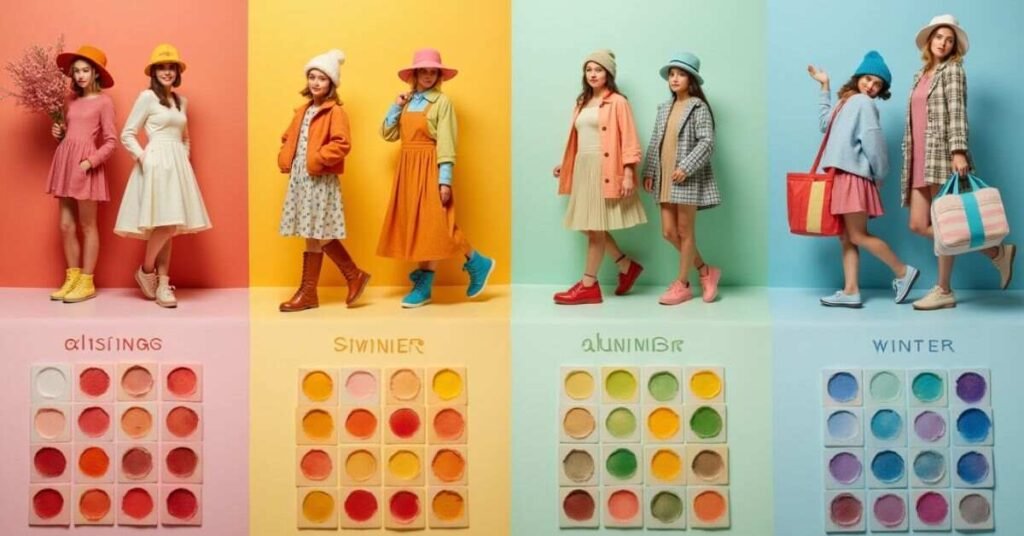
Every season has a signature set of colors that make you look your best. Warm seasons like Spring and Autumn look amazing in colors with golden or yellow undertones. Cool seasons like Summer and Winter shine in colors with blue or pink undertones. Choosing the right shade ensures your clothes enhance your natural beauty rather than overpowering it.
You can use these specific colors for more than just your wardrobe. Designers apply these palettes to home interiors and digital branding to create a specific vibe. A Spring palette feels energetic and fresh, while an Autumn palette feels cozy and grounded. Follow these color suggestions to build a look that feels balanced and professional.
| Season | Color Category | Top Recommendations | Mood/Vibe |
| Spring | Bright & Warm | Warm Turquoise, Peach, Bright Coral | Energetic & Fresh |
| Spring | Light Neutrals | Cream, Light Beige, Golden Tan | Sunny & Open |
| Summer | Soft & Cool | Dusty Rose, Sage Green, Lavender | Calm & Elegant |
| Summer | Muted Neutrals | Soft White, Slate Gray, Cool Cocoa | Sophisticated |
| Autumn | Deep & Warm | Burnt Orange, Mustard, Olive Green | Cozy & Grounded |
| Autumn | Rich Neutrals | Creamy Beige, Camel, Deep Espresso | Earthy & Solid |
| Winter | Bold & Cool | Royal Blue, Fuchsia, Emerald Green | Sharp & Powerful |
| Winter | Sharp Neutrals | Pure White, Jet Black, Silver Gray | Clean & Modern |
| Spring | Floral Tones | Daffodil Yellow, Poppy Red, Mint | Playful |
| Summer | Sea Tones | Sky Blue, Seafoam, Mauve | Peaceful |
| Autumn | Forest Tones | Terracotta, Forest Green, Brick | Natural |
| Winter | Jewel Tones | Ruby Red, Sapphire, Amethyst | Luxurious |
Seasonal Color Palette Quiz: Find Your Season
You can discover your season by answering a few simple questions about your natural look. Focus on how your skin reacts to the sun and which neutrals look best on you. This quick self-test helps you identify if you lean toward warm or cool tones. Grab a mirror and find a spot with plenty of natural sunlight to get the most accurate results.
Answer these questions to narrow down your category. If you choose mostly “A” options, you likely have a warm palette. If you choose mostly “B” options, you probably fit a cool palette. Use these clues to start building a wardrobe that truly complements your features.
- Your Skin: Does your skin tan easily (A) or does it burn and turn pink (B)?
- Your Jewelry: Do you look better in gold (A) or silver (B)?
- The White Test: Does an off-white or cream shirt look better (A), or do you prefer bright, pure white (B)?
- Your Eyes: Do your eyes have golden or brown flecks (A) or are they blue, grey, or cool hazel (B)?
- The Vein Check: Do your veins look greenish (A) or do they appear blue or purple (B)?
Seasonal Color Palette for Fashion and Style

You can use a seasonal color palette to build a wardrobe that always works. It stops you from buying clothes that look great on the rack but dull on your skin. When you wear your specific colors, you look more vibrant and put-together. This approach makes getting dressed every morning much faster and easier.
Fashion experts use these palettes to create a cohesive style. You can mix and match different pieces within your season without worrying about clashing colors. This strategy helps you build a capsule wardrobe with fewer, higher-quality items. You will save money and feel more confident because every outfit enhances your natural beauty.
Read More Information | https://digitalpinmedia.com/complementary-color-palette/
How Color Palettes Improves Your Fashion Choices
A seasonal color palette takes the guesswork out of shopping. You stop wasting money on clothes that stay in the back of your closet. Instead, you buy pieces that make your skin glow and your eyes pop. This simple tool helps you choose the right shades for your unique look every single time.
Using these colors also helps you build a better wardrobe. Everything in your palette naturally matches, so you can create many outfits with just a few items. You feel more confident because you know your clothes complement your natural beauty. This approach turns a messy closet into a collection of stylish, easy-to-wear pieces.
Best Outfit Ideas for Each Seasonal Color Palette
You can create stunning outfits by matching your clothes to your natural season. A well-chosen outfit highlights your best features and makes your skin look healthy. Looking stylish every day doesn’t require a huge wardrobe. Focus on picking a few key pieces in your seasonal shades to build a versatile and modern look.
Mix your seasonal colors with neutral basics to keep your style balanced. For example, a Winter type might pair a bright royal blue top with crisp black trousers. An Autumn type looks best in a rust-colored sweater with warm beige pants. Use these ideas to experiment with your wardrobe and find combinations that make you feel confident.
- Spring Outfits: Combine peach blouses with light denim or cream skirts for a fresh, sunny vibe.
- Summer Outfits: Try a lavender sundress or a soft slate-gray suit for an elegant and cool appearance.
- Autumn Outfits: Wear olive green jackets with mustard yellow scarves to capture a cozy, earthy feel.
- Winter Outfits: Pair a vibrant emerald green coat with pure white accessories for a high-contrast, bold look.
- Work Wear: Choose navy for Winter and Summer, or warm camel for Spring and Autumn professional outfits.
- Casual Style: Use mint green for a light Spring look or deep burgundy for a rich Autumn weekend style.
Seasonal Color Palette Mistakes to Avoid
Many people make the mistake of following trends instead of their own skin tone. You might buy a neon shirt because it looks popular, but it might make your skin look pale or tired. Another common error involves ignoring natural lighting when you test colors. Artificial yellow lights in stores can change how a color looks against your face.
[Image showing a person comparing two different fabric colors under dull indoor light versus bright natural light]
You should also avoid sticking too strictly to a “black and white” rule. Not everyone looks their best in pure black or bright white. Some seasons look much better in charcoal gray or creamy off-white. Small mistakes like these can ruin an otherwise great outfit and make you feel less confident in your look.
- Forcing a Season: Do not try to fit into a season just because you like the colors.
- Ignoring Contrast: Pay attention to how light or dark your hair is compared to your skin.
- Wrong Metal Tones: Avoid wearing gold if you have cool undertones, as it can look muddy.
- Overwhelming Your Face: Do not let a very bright color drown out your natural features.
- Old Samples: Avoid using faded or old color swatches that no longer show the true shade.
FAQs
Q1. What is the easiest way to find my season?
You can check your veins under natural light. Green veins suggest a warm season like Spring or Autumn, while blue veins indicate a cool season like Winter or Summer.
Q2. Can my seasonal color palette change over time?
Your skin undertone stays the same, but aging or changing your hair color can shift your best shades. You should re-evaluate your palette if you make a major hair change.
Q3. Does a seasonal palette mean I can never wear black?
Not necessarily, but black often looks best on Winter types. Other seasons should try “near-blacks” like charcoal gray for Summer or deep chocolate brown for Autumn.
Q4. How many colors are usually in a seasonal palette?
Most palettes include 30 to 40 shades that harmonize with each other. These include your best neutrals, accent colors, and “wow” colors that make you pop.
Q5. Why do I look washed out in some colors?
You are likely wearing a color that clashes with your natural undertone. Wearing a cool color when you have warm skin can make your complexion look dull or tired.
Conclusion
Finding your seasonal color palette is a simple way to boost your confidence. You no longer have to guess which clothes will look good on you at the store. Instead, you can build a wardrobe that naturally highlights your best features and makes your skin glow. This small change helps you look more polished and put-together every single day.
Remember that fashion should always feel fun and personal. Use these color tips as a helpful guide rather than a set of strict rules. You can still experiment with different shades and styles to find what feels right for you. Start using your seasonal colors today to create a fresh, modern look that truly reflects your personality.

Welcome to Digital Pin Media! I’m Usama Ijaz, an AI-Powered SEO, and Content Write with 4 years of experience.
I help websites rank higher, grow traffic, and look amazing. My goal is to make SEO and web design simple and effective for everyone.
Let’s achieve more together!






One Comment